


Why experience insight matters in a long, emotional, trust-based sales cycle
Senior living is not a transactional sale.
It is a long, emotional journey, usually driven by adult children who are:
- Exhausted caregivers
- Under pressure to make the “right” decision
- Afraid of making a mistake
- Balancing guilt, urgency, and hope
Families don’t just choose a building. They choose who they trust with someone they love.
That’s why mystery shopping—when done well—can be a powerful tool senior living leaders use to strengthen the delivery of strategy at the front line.
Learn about SLP Mystery Shopping Service
Why Mystery Shopping Matters in Senior Living
Traditional metrics tell us what is happening:
- Lead counts
- Conversion ratios
- Occupancy percentages
Mystery shopping tells us why it’s happening.
It captures the lived experience of a family as they:
- Navigate your website in the middle of the night
- Submit an inquiry while under stress
- Walk through your doors for the first time
- Decide whether they feel heard, understood, and safe
In a relationship-based sale, experience is the product. Mystery shopping allows leaders to see that experience clearly.
The Real Benefits of Mystery Shopping
When used strategically, mystery shopping helps operators:
- See the sales process through a family’s eyes
- Identify where trust is built—or quietly broken
- Evaluate sales skills, not just outcomes
- Create consistency across communities
- Coach with clarity instead of opinion
- Improve conversion without increasing marketing spend
Most importantly, it helps ensure that every family feels guided, respected, and supported, regardless of which community or sales professional they encounter.
The Common Objections—and Why They’re Understandable
Many operators hesitate to embrace mystery shopping. And honestly, for good reason.
Here are the most common concerns—and why they don’t have to be deal-breakers.
“Mystery shopping hurts morale.”
This happens when mystery shopping is used as punishment.
Reframe:
When positioned as a development tool—grounded in a relationship-based sales model—mystery shopping actually reduces defensiveness. It replaces vague feedback with clear, observable behaviors that sales professionals can improve.
“We already know where our problems are.”
Most leaders know what their numbers are telling them.
Reframe:
Mystery shopping reveals why prospects hesitate, stall, or disappear—often long before the numbers reflect it. It fills the gap between metrics and meaning.
“Mystery shoppers aren’t real families.”
True—shoppers aren’t emotionally invested in the same way.
Reframe:
They don’t evaluate feelings; they evaluate behaviors. Listening, empathy, clarity, responsiveness, and next steps are exactly what real families experience in the moment.
“It’s too subjective.”
Sales is nuanced, and fairness matters.
Reframe:
Subjectivity disappears when evaluations are tied to a clear sales framework. Mystery shopping works when it measures what happened, not how someone felt about it.
“We’ve tried it before and nothing changed.”
This is perhaps the most honest objection of all.
Reframe:
Mystery shopping fails when it’s treated as a one-time report. It succeeds when it’s part of a coaching cadence—baseline, improvement, reinforcement, and re-evaluation.
Integrating Mystery Shopping as a Strategic Best Practice
In senior living, mystery shopping should not be reactive or occasional. It should mirror the reality of the sales cycle itself.
A Best-Practice Approach
- Establish a baseline to understand the current experience
- Use findings in coaching conversations, not performance reviews
- Re-shop targeted behaviors, not entire processes every time
- Reinforce strengths as often as gaps
- Repeat consistently to sustain improvement
Over time, mystery shopping becomes a feedback loop, not an inspection.
Why This Matters in a Long, Emotional Sales Cycle
Families remember:
- Whether they were listened to
- Whether their fear was acknowledged
- Whether next steps felt clear and supportive
- Whether follow-up felt personal or transactional
Mystery shopping evaluates those moments—before families walk away quietly.
In a competitive market, trust is the differentiator. Communities that guide families well don’t just win move-ins; they earn advocates.
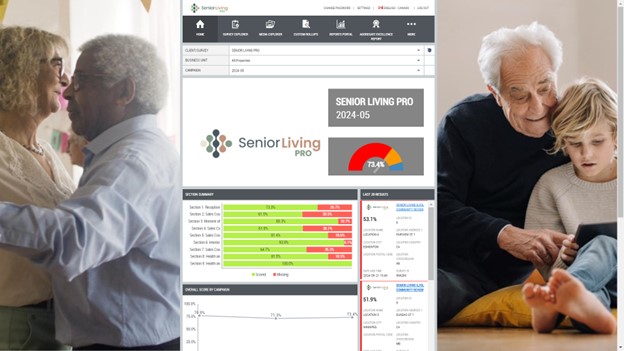
The Business Impact
Even small improvements in the sales experience can lead to:
- Higher tour-to-move-in conversion
- Shorter decision timelines
- Stronger confidence in care level recommendations
- More stable occupancy
- Less sales team burnout
Mystery shopping doesn’t replace leadership—it equips it.
The Bottom Line
Mystery shopping isn’t about catching mistakes.
It’s about understanding experience.
In senior living, where trust determines success, leaders who invest in understanding the family journey are the ones who build stronger teams, healthier occupancy, and lasting reputations.
When used thoughtfully, mystery shopping becomes exactly what it should be:
a tool for growth, clarity, and connection.
If you've been considering implementing, or frankly improving your Customer Experience Evaluation through exceptional mystery shopping service in the senior living industry, I invite you to review the information on my website and connect with me personally to review your specific concerns and goals.
Let's make visible what you can only assume is happening.
Click here for information on Mystery Shopping
Not sure how mystery shopping can really help with your strategic initiatives? Just want to connect? Send me an email [email protected]
Happy to provide a 30-minute free consultation - let's talk about what you need face-to-face.
Until next time, my warmest regards,
Jodi



Responses