

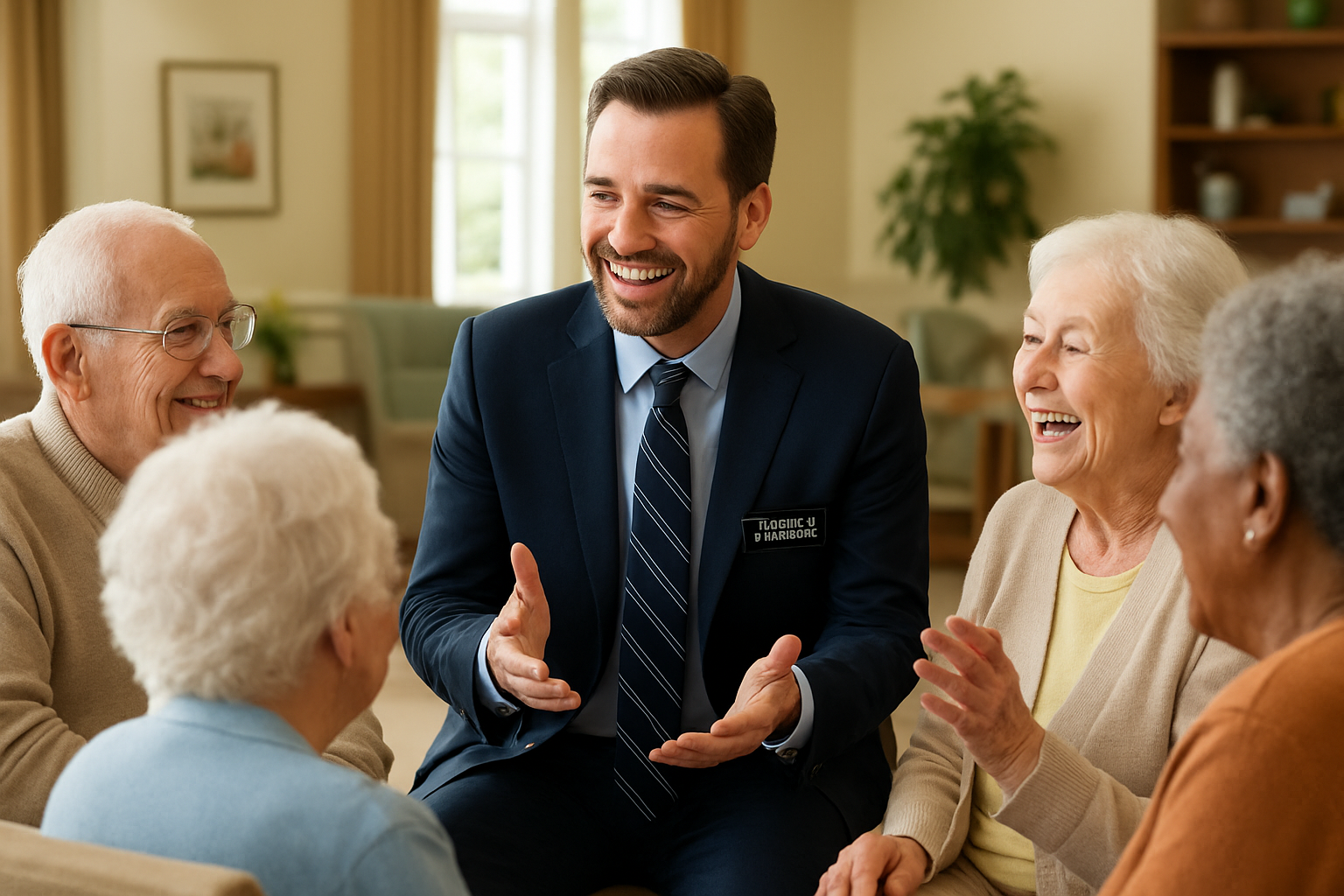
 Image generated by ChatGPT (OpenAI).
Leadership crisis emerges in Senior Living
Across North America, Executive Directors (EDs) and General Managers—the community leaders—are leaving their roles at an unprecedented rate. Some buildings cycle through two or even three EDs a year. This instability is more than an HR challenge; it directly impacts residents, families, team culture, and occupancy.
The question is no longer “Is this happening?” but “Why—and how do we fix it fast?”
The Reality: The ED Role Has Become Unsustainable
Today’s senior living Executive Director manages an impossible trifecta: Operational Crisis, Increased Compliance, High-Speed Financial Improvement Expectations.
Persistent staffing shortages leave EDs bouncing between recruitment, crisis scheduling, and family reassurance—all while trying to keep morale and occupancy up. Many are covering clinical or front-line gaps themselves.
Inspections and compliance expectations are higher. Documentation is relentless. EDs increasingly fear citations, penalties, or litigation—yet often feel under-supported in managing this risk.
Financial expectations that move faster than recovery with corporate dashboards demanding quick occupancy growth and margin improvement—sometimes weeks after a leadership transition.
Without time to rebuild culture and stabilize staffing, many EDs burn out and exit.
Heather Maxwell, President and CEO Maxwell Management Group Ltd., a leading Canadian recruitment company, sites prioritizing strong leadership-development pipelines as a key strategy,
“Monitoring leadership well-being, tracking internal turnover trends, and investing in the growth and resilience of all key leadership roles are now essential to maintaining continuity, organizational performance, and a culture where both staff and residents can thrive.”
Maxwell stresses a heightened need for a truly healthy workplace environment.
Why This Matters: The 80+ Resident Feels the Impact
Senior living is not hospitality with caregivers; it is home for older adults whose needs are emotional, physical, and deeply personal.
Residents—mostly in their 80s and 90s—thrive on:
- Consistency
- Predictability
- Warmth and familiarity
- Trust in their community leaders
When leadership churns, family confidence erodes, team culture fractures, care standards become inconsistent, occupancy declines, and the emotional stability of residents—who form strong bonds with EDs—is disrupted
What EDs Say They Need—But Rarely Receive
Across surveys, exit interviews, and industry research, departing leaders consistently point to the same themes:
Realistic Workloads
EDs need the space to lead strategically—not to fill shifts or act as the community’s “chief firefighter.”
Competitive, Respectful Compensation
Top leaders are expected to manage multimillion-dollar assets, complex care environments, and high-risk regulatory oversight. Compensation must reflect that responsibility.
Adequate Clinical and Operational Support
A strong Director of Care/Nursing, HR support, and regional coaching dramatically improve retention.
Time to Turn a Community Around
Quality, culture, and occupancy improvement takes 9–18 months—not 90 days.
Emotional Support and Peer Connection
Leading a senior living community is heart-centered work. EDs carry resident loss, staff struggles, family concerns, and the emotional complexity of aging. They need safe spaces to replenish their compassion.
What the Best Operators Are Doing (And It’s Working)
Several forward-thinking organizations are reducing turnover by deliberately redesigning leadership roles.
Lean into new technologies targeting the role
Kerry Chartrand, Founder & CEO of Wentoo, a regulatory and compliance management software for Senior Care operators, built the company literally to make the ED job easier.
"Risk will replace occupancy as the next major challenge in Senior Living. Clarity on what needs to be done, who is accountable, and oversight without requiring a road warrior manager to pull binders off shelves in a remote building. Just as we wouldn’t manage sales without a CRM, we shouldn’t be managing risk without a robust compliance system.”
Creating ED onboarding pathways that teach the industry, not just the brand
Because many EDs come from hospitality, healthcare, or operations but must quickly learn the nuances of aging.
ED Succession Plan; Building “deep benches” (Assistant ED roles, admin leadership tracks)
Succession planning calms chaos and lifts internal mobility.
Identify Internal Talent Early
- Select high-potential department heads (e.g., DOC, Sales Director, Ops/Hospitality Manager).
- Use a formal readiness assessment: leadership behaviors, communication, accountability, emotional intelligence.
Create an Assistant Executive Director (AED) or Operations Manager Role
- Give emerging leaders exposure to:
- Budgeting & financials, regulatory compliance, HR & staffing, resident/family relations, sales & occupancy strategy
Build a Structured Development Pathway
- 6–12 month leadership rotations through:
- Care and clinical, sales, dining and housekeeping, scheduling and staffing, compliance and quality
Use Shadowing and Interim Assignments
- Prospective EDs shadow current EDs.
- Assign interim-leadership opportunities (vacation coverage, project leadership).
- Pair with monthly coaching from the Regional Director.
Aligning incentives with long-term outcomes not just short term occupancy numbers
That means rewarding:
- Quality improvements
- Team retention
- Family satisfaction
- Resident well-being
Offering mental health and peer support programs
Because compassion fatigue is real—and preventable. Compassion fatigue is preventable when organizations treat leadership well-being as a strategic priority. The ED role cannot rely solely on personal resilience.
Operators should provide:
- Mental health resources
- Access to therapeutic support
- Leadership coaching
- Regional guidance that does not blame or shame
- Realistic KPIs (focusing on quality, staffing, and culture—not only occupancy)
A Call to Action: Reinvest in the People Who Care for Your People
The industry’s most powerful differentiator is not real estate, dining, amenities, or technology. It is leadership.
An Executive Director sets the tone. If we want to provide exceptional homes for older adults, we must provide exceptional support for the leaders who run them.
(Note: Part 2 of this thinking comes out in January 2026 - stay tuned, "How Compassion Fatigue Shows Up in Senior Living EDs".)


Responses