

The Regional Manager’s Guide to Mystery Shopping

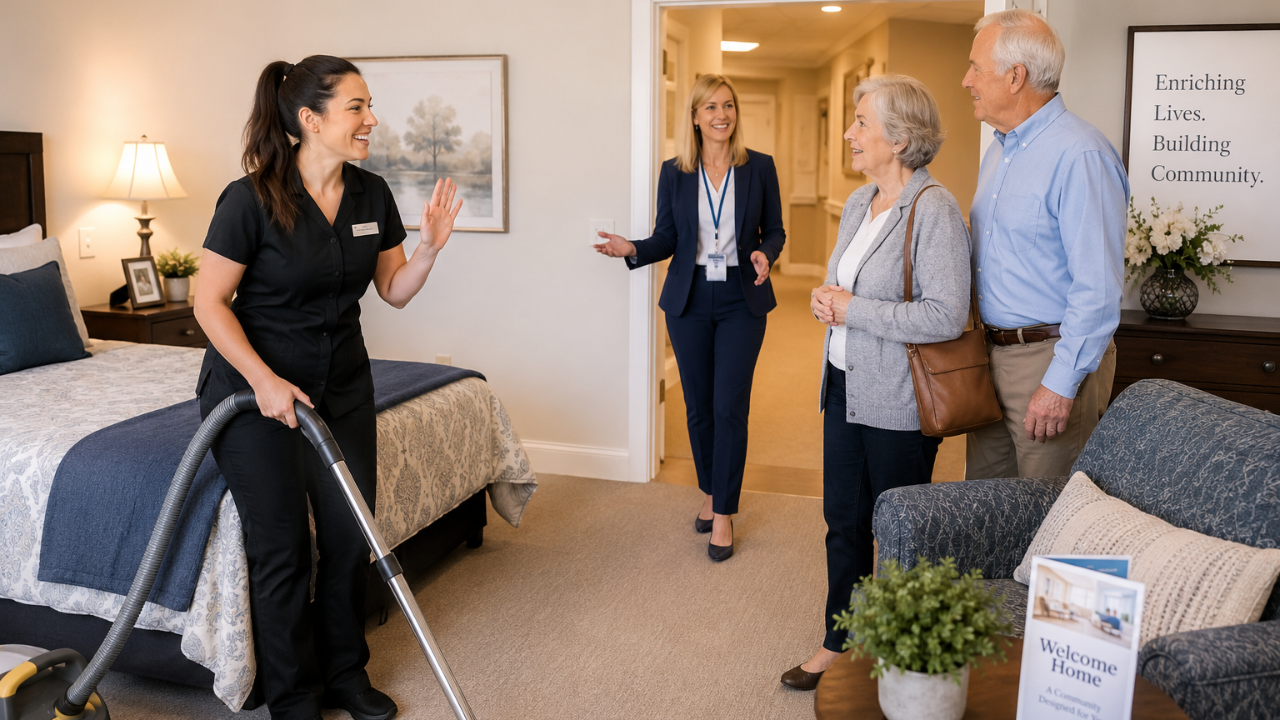
Custom AI-generated image representing the senior living sales experience
How to use insight—not inspection—to improve results across your region.
I spent my first seven years in the senior living industry as a Regional Manager of Sales and Marketing doing everything I could to help people thrive. If only to suppress my own youthful insecurities, I began every coaching conversation in the field with the declaration that I knew I would never be successful if they weren’t - my only job was to help them get better every single day.
In today’s language, you'd call this a statement of intention. Ultimately, it mattered that everyone in my environment felt like my role was to build them up to be bigger and better not to find fault.
I think this still matters.
I was introduced to Mystery Shopping in the early 2000s. Gigantic white binder with your name and region on the spin were dropped on the middle of the board room table at every quarterly sales meeting. You quickly learned whether it was going to be a great meeting – or a personal failure.
Fast forward two decades and I am now building customer experience evaluation tools to support Regional Managers and praying that they see them as strategic tools that connect to improved results.
As a Regional Sales Manager, your success isn’t just about occupancy numbers—it’s about what’s happening in the conversations that lead to those move-ins.
Mystery shopping reports a customer experience and, when used correctly, is a powerful tool allowing you to see the real experience families are having (vs the one that’s intended), coach effectively, and build consistent performance across communities.
Used poorly, it feels like policing with consequences.
Used well, it becomes leadership intelligence.
Why Mystery Shopping Matters for Regional Leaders
Most Regionals never experience their own sales process the way families do. And that sales process is the product families use to make a decision. It’s the website at midnight when they get a moment to review, a first inquiry while stress is high. A tour where the only thing they are seeking is what’s gone wrong and quietly seeing if they can trust you. It’s the follow-up that may (or may not) take place and where momentum ignites or dies.
Mystery shopping gives you objective visibility into:
- How your sales professionals show up
- Where trust is built—or lost
- Which behaviours move decisions forward
- Where inconsistency is quietly costing you
It answers the question you’re already asking, Why are some communities converting and others struggling?
What High-Performing Regionals Use Mystery Shopping For
Strong regional leaders don’t use mystery shops to catch mistakes—they use them to:
- Identify skill gaps (listening, discovery, next steps)
- Normalize coaching conversations
- Create consistency across markets
- Reinforce relationship-based selling
Mystery shopping shifts feedback from opinion to observation.
Read more about Mystery Shopping
Best Practice for Using Mystery Shopping
Regular baseline intervals for shops delivers data that will build knowledge and understanding. Specifically, that knowledge will lead to areas of best practice to be replicated across the regions and gaps that require additional training, coaching and repetition. Data requires humans to interpret and tell it’s stories and that is where RSMs can strengthen strategy.
Quarter 1: Establish the Baseline
Goal: Create clarity and trust in the process
- Run baseline shops across all communities
- Evaluate the full journey (digital → inquiry → tour → follow-up)
- Share results one-on-one
- Position shops as a development tool—not a scorecard
RSM Focus:
Identify regional patterns and select 2–3 behaviors to improve across the team.
Quarter 2: Coach What Matters
Goal: Turn insight into skill improvement
- Re-shop targeted communities
- Use findings in coaching conversations and sales training
- Focus on discovery, emotional connection, and next steps
RSM Focus:
Coach behaviors, not personalities. Reinforce progress quickly.
Quarter 3: Reinforce & Benchmark
Goal: Build consistency and momentum
- Compare shops across all communities
- Highlight top-performing behaviors
- Share best practices peer-to-peer
RSM Focus:
Reduce performance gaps and standardize “what good looks like.”
Quarter 4: Optimize & Plan Ahead
Goal: Tie customer experience to business outcomes
- Run outcome shops across all communities
- Focus shops on follow-up quality and sales progression
- Review year-over-year trends
- Use insights to inform training, staffing, and priorities
RSM Focus:
Demonstrate ROI and set next year’s performance strategy.
Best Practices That Make Mystery Shopping Work
✔ Use it consistently—not reactively
✔ Tie it to a clear relationship-based sales model
✔ Share feedback quickly
✔ Focus on a few behaviors at a time
✔ Never use it as surprise discipline
Mystery shopping fails when it becomes infrequent, score-obsessed, punitive or detached from positive performance coaching.
The Bottom Line for Regional Sales Managers
When used strategically, mystery shopping helps you:
- Coach with confidence
- Improve conversion without more leads
- Build stronger, more consistent sales teams
- Protect occupancy and revenue
- Lead with clarity instead of assumptions
Mystery shopping is only about inspection if you let be. This isn’t a gotcha moment. It’s about improving conversations that change lives.
I've build some powerful, industry leading sales training for anyone in senior living. My complimentary webinar 4-Step System for Highly Effective Sales in Senior Living is just 45-minutes and delivers incredible value. You can access it below.
Click Here to Access my Free Sales Webinar
Want to connect? Send me an email [email protected] Happy to provide a 30-minute free consultation - let's talk about what you need face-to-face.
Until next time, my warmest regards,
Jodi



Responses